|
| Minister and other distinguish other distinguished guests observe as Mr. Mallawaarachchi explains the CSA Centre’s
social media platforms |
Colombo,
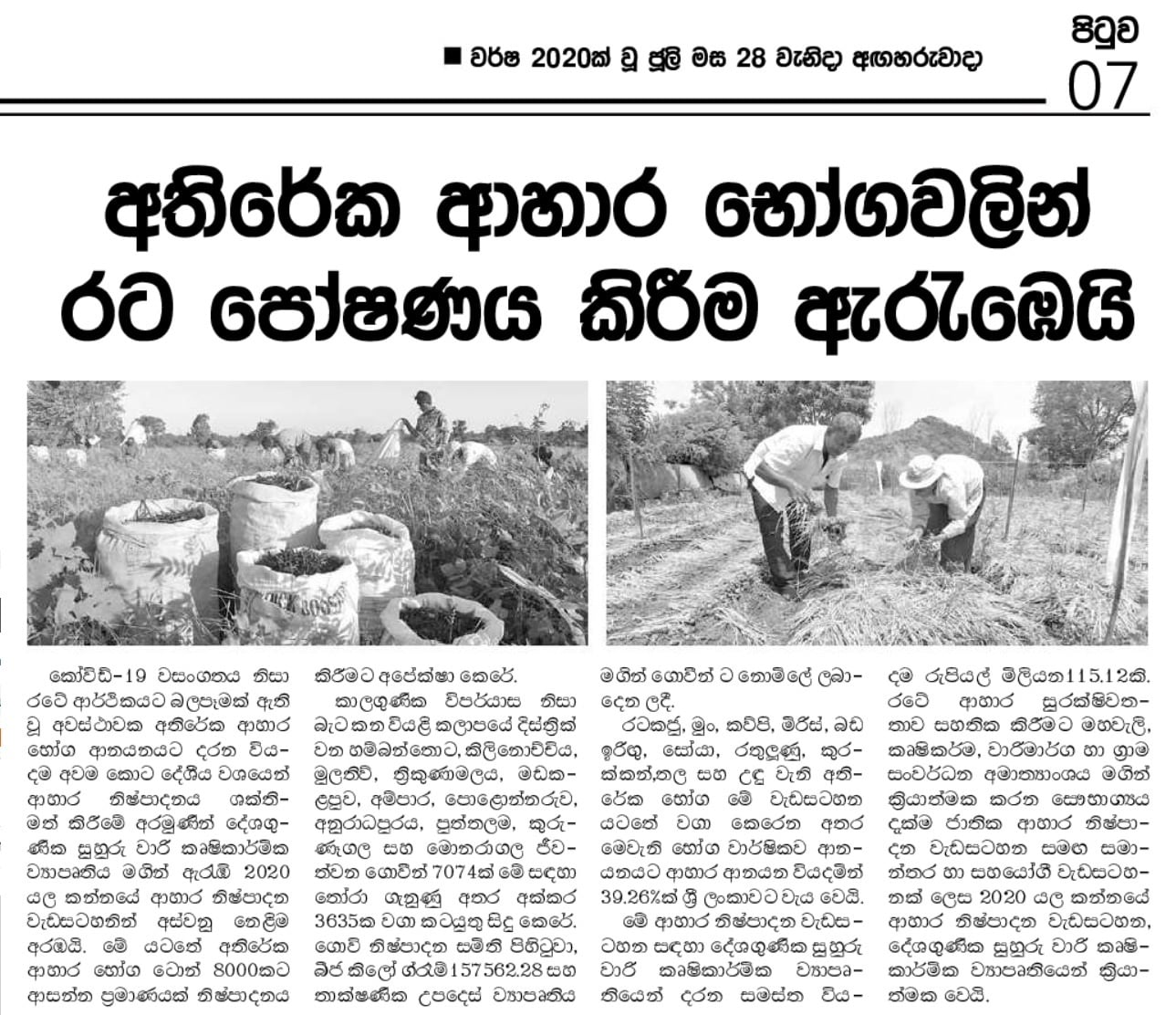
April 27 — Marking a major step forward in strengthening climate-resilient
agricultural development, Sri Lanka today (27) inaugurated its first-ever
Climate Smart Agriculture Centre (CSAC) at the
Ministry of Agriculture, Livestock, Land and Irrigation. The Centre was
officially opened by Minister Lal Kantha in a ceremony attended by Mr. Namal Karunaratne, Deputy Minister of Agriculture and
Livestock, Mr. D. P. Wickramasinghe, Secretary of the Ministry of
Agriculture, Livestock, Land and Irrigation including senior government
officials, agricultural experts and representatives of the World Bank.
The
establishment of the CSAC is being widely recognized as a significant milestone
in the country’s ongoing efforts to address the growing challenges posed by
climate change to agriculture, food security, and rural livelihoods. The CSAC is
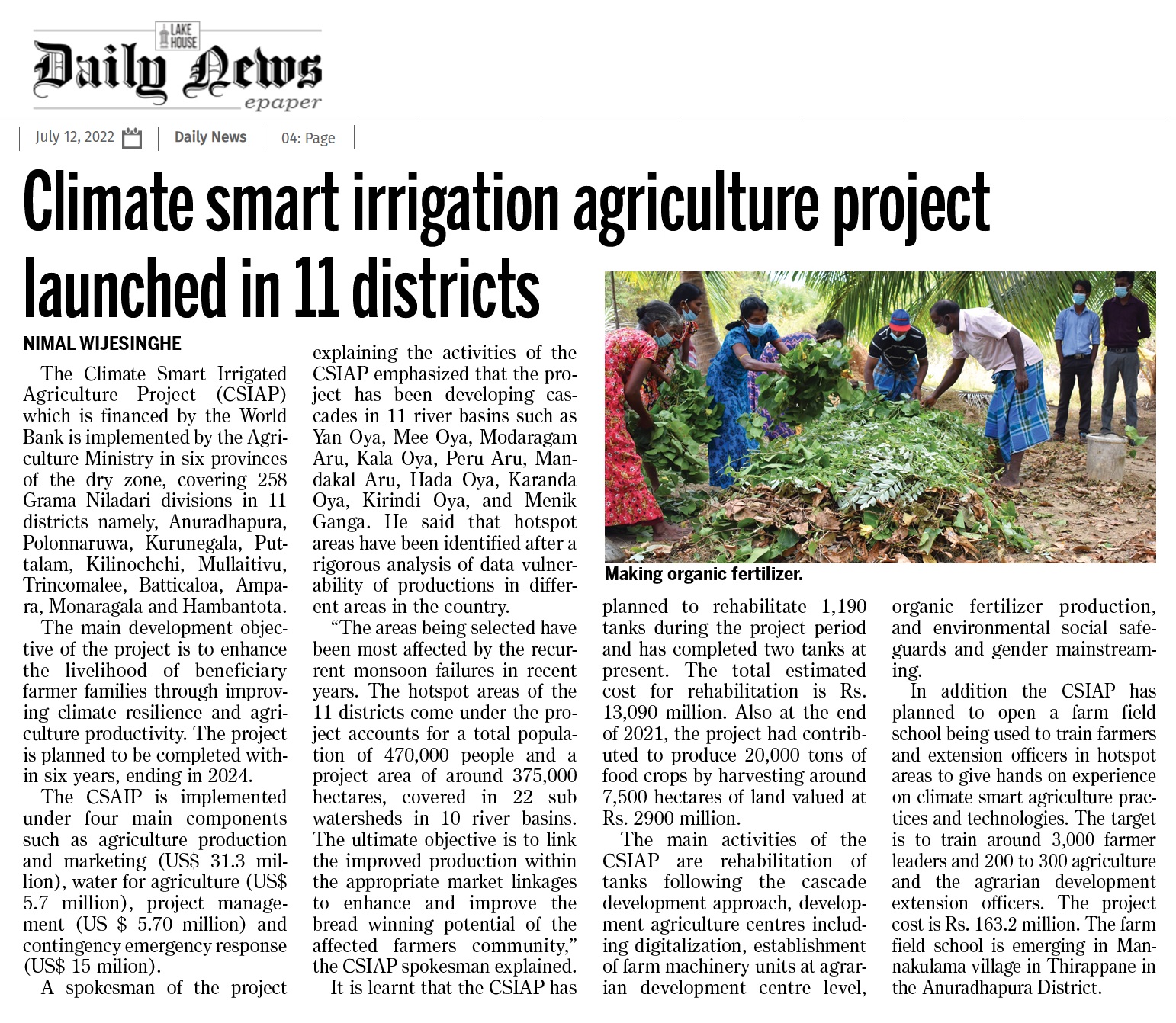
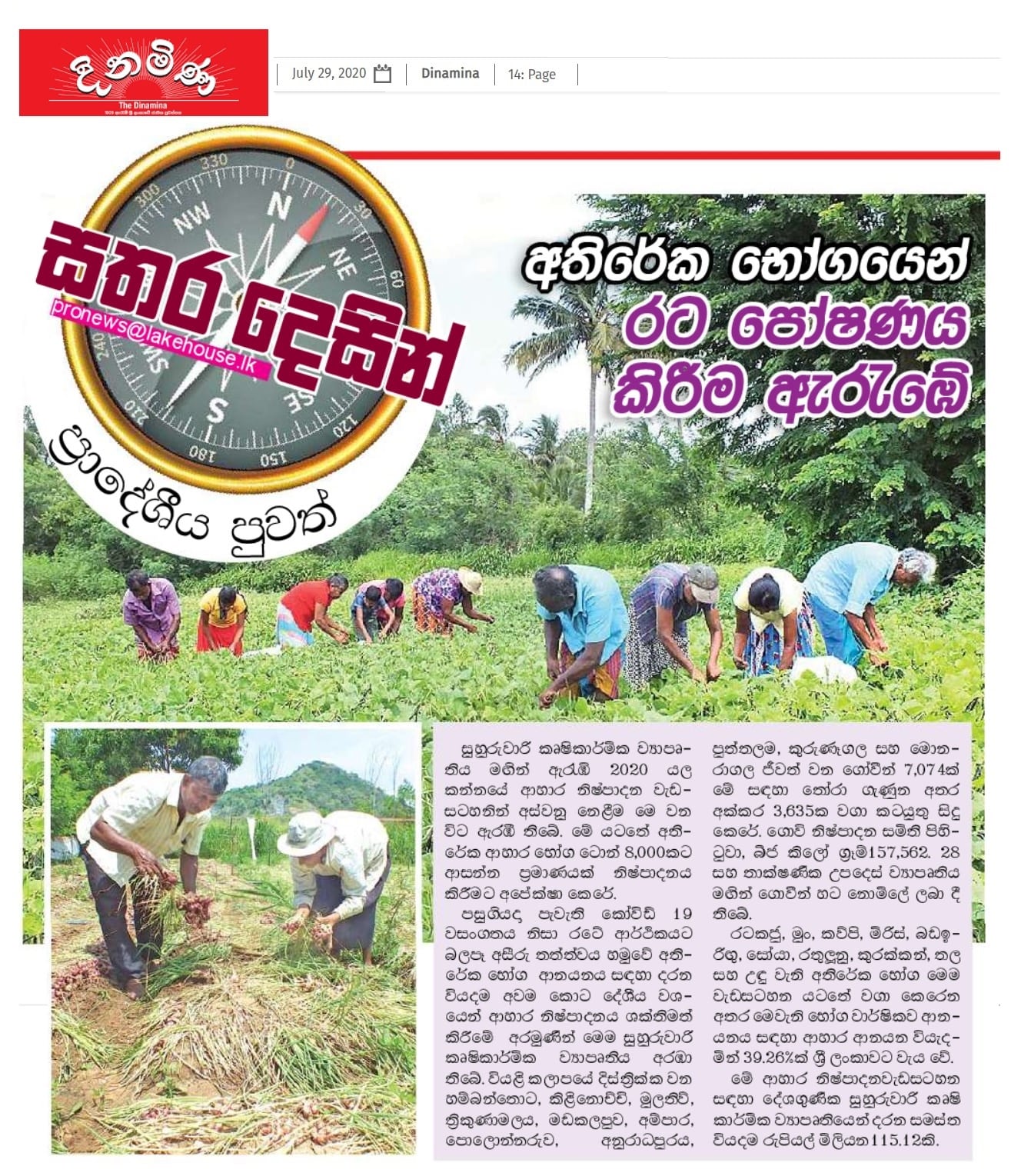
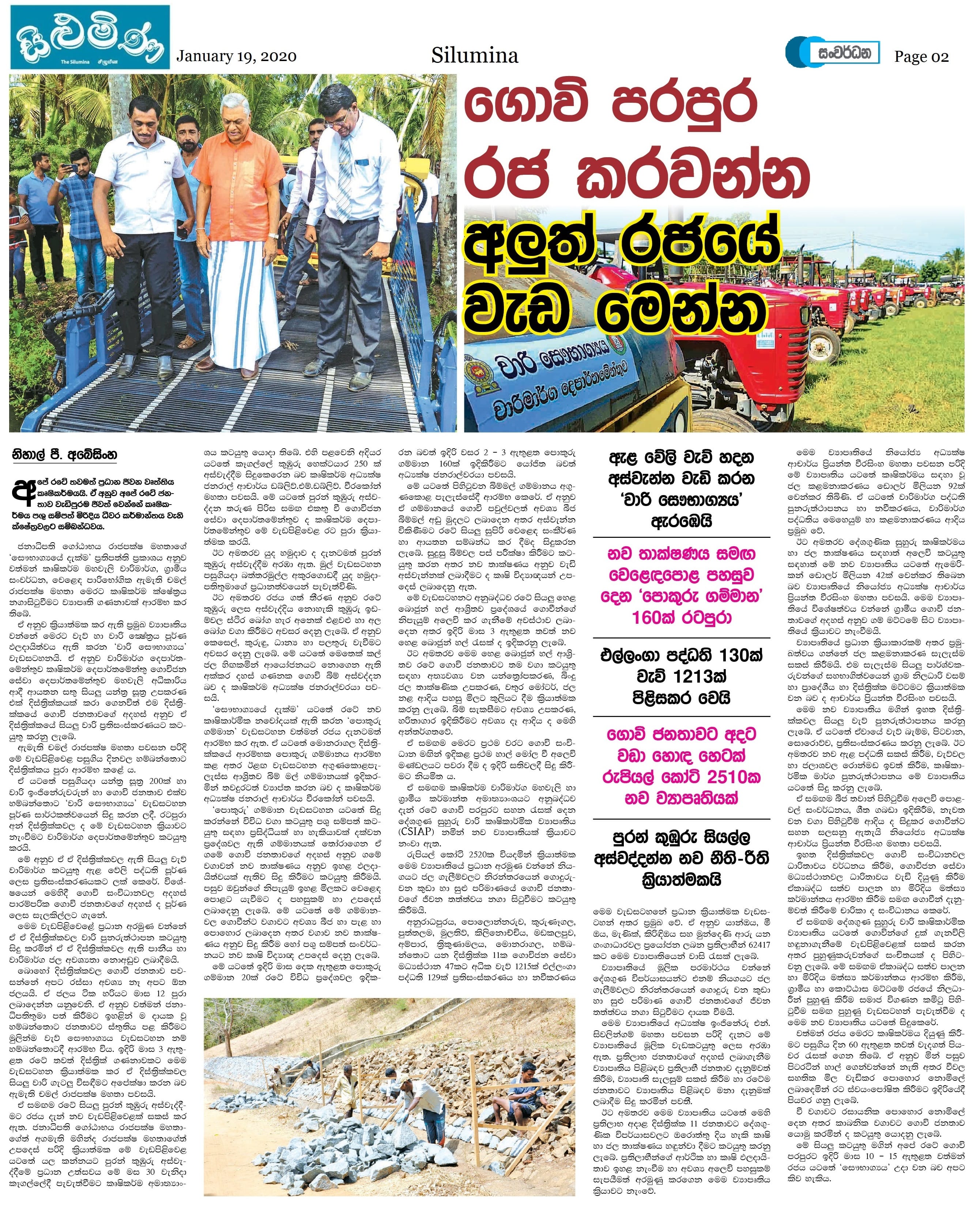
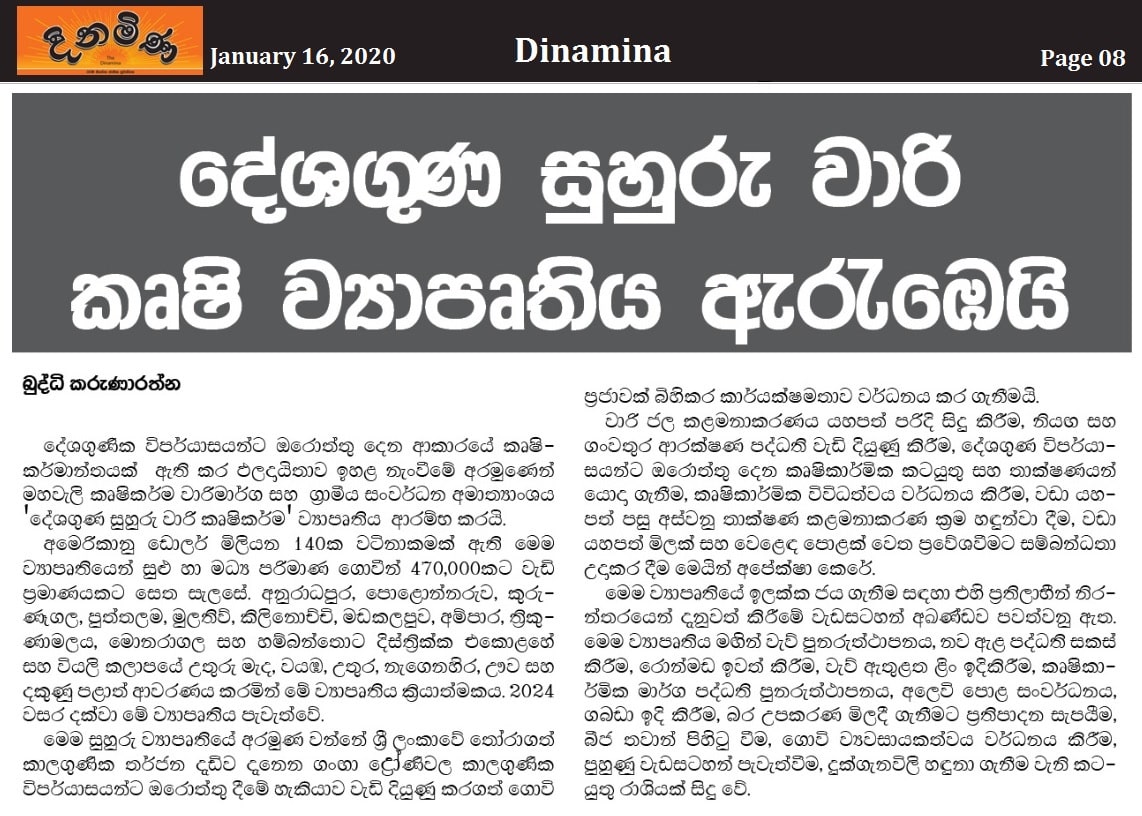
a key component of the Climate-Smart Irrigated Agriculture Project (CSIAP) funded
by the World Bank and, the center has been equipped with modern information and
communication technology facilities and other essential resources to ensure
effective and efficient operations.
Following
the inauguration of the CSAC, K. D. Lal Kantha
officially launched the Centre’s social media platforms, including its blog,
Facebook, Twitter, and YouTube channels. Addressing the gathering, Samantha Mallawaarachchi, IEC & ICT
Specialist of the CSIAP and the initiator of the social media platforms,
briefed the Minister and other distinguished guests on the features of the
blog, highlighting its role in knowledge dissemination and its effectiveness as
an information-sharing platform.
A
National Hub for Climate-Resilient Agriculture |
| Pre-inauguration programme commenced |
The
newly established CSAC will function as a specialized institutional platform
dedicated to advancing climate-resilient, sustainable, and innovation-driven
agricultural development across Sri Lanka. Operating under the Agri-Technology
Division of the Ministry of Agriculture, Livestock, Land and Irrigation, the
Centre is expected to serve as a national coordination and knowledge hub,
providing strategic direction, technical leadership, and institutional support
for planning, implementing, and scaling climate-smart agriculture initiatives.
A
key feature of the Centre is its role as a coordination mechanism. It will
facilitate collaboration among multiple ministries, departments, and government
agencies involved in climate-related agriculture, natural resource management,
and rural development. This is particularly important in a context where
numerous climate-related programmes are currently being implemented by
different institutions, often with limited coordination. Officials
noted that the CSAC will help harmonize policies, programmes, and investments,
ensuring better alignment, reducing duplication of efforts, and maximizing the
overall impact of climate-related interventions in the agricultural sector.
Vision
for a Sustainable Agrifood SystemThe
Centre has articulated a clear vision of becoming Sri Lanka’s national Centre
of Excellence for Climate Smart Agriculture, while also positioning the country
as a regional leader in South Asia. Its broader goal is to support the
transformation of the agrifood system into one that is productive, resilient,
resource-efficient, and environmentally sustainable. The
mission of the Centre is to mainstream and scale up climate-smart technologies,
practices, and policies across the country. This will be achieved through its
role as a national platform for coordination, facilitation, and knowledge
sharing aimed at strengthening climate-resilient agricultural development.
Key
Objectives and Functions
The
CSAC will focus on several key objectives, including strengthening national
coordination on climate-smart agriculture, facilitating the adoption of modern
technologies and sustainable practices, and promoting research, innovation, and
knowledge dissemination. It
will also play a vital role in building institutional and human capacity.
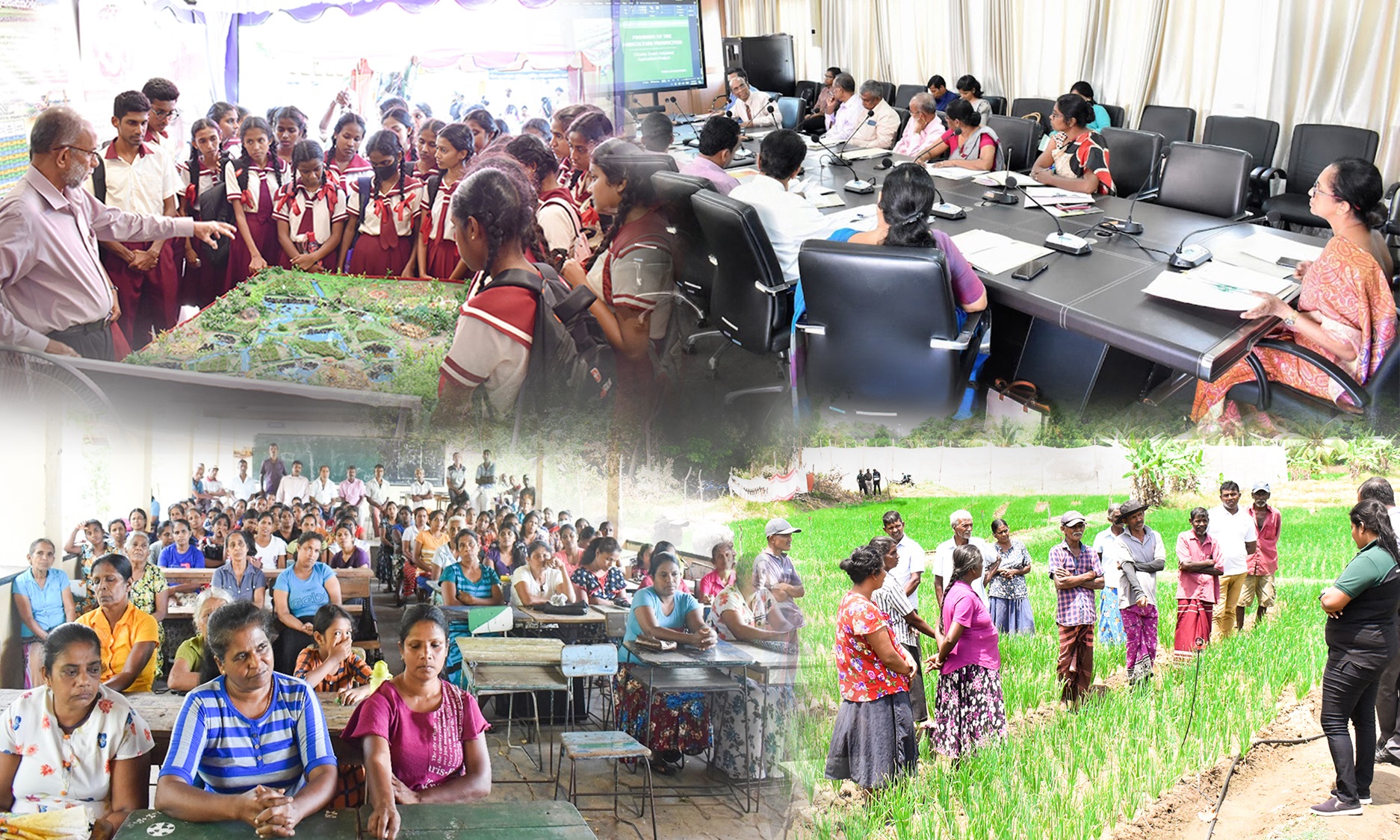
Training programmes, technical workshops, and awareness campaigns will be
conducted for ministry officials, extension officers, farmers, and agribusiness
stakeholders. These initiatives aim to enhance the practical implementation of
climate-smart approaches at all levels.
Another
major focus area will be supporting evidence-based policymaking. By generating
data, sharing lessons learned, and providing analytical insights, the Centre
will contribute to more informed decision-making in national agricultural and
climate policies.
Promoting
Technology and Innovation |
| Minister cuts the ribbon to open the centre and Deputy Minister and Secretary look on |
Digitalization
and innovation will form a cornerstone of the Centre’s work. The CSAC plans to
promote digital agriculture solutions, climate information services, and smart
advisory systems that will improve farmers’ access to timely and accurate
information.Through
these initiatives, farmers will be better connected to markets, financial
institutions, and agricultural service providers, enabling more efficient and
informed decision-making. The Centre will also support the use of data-driven
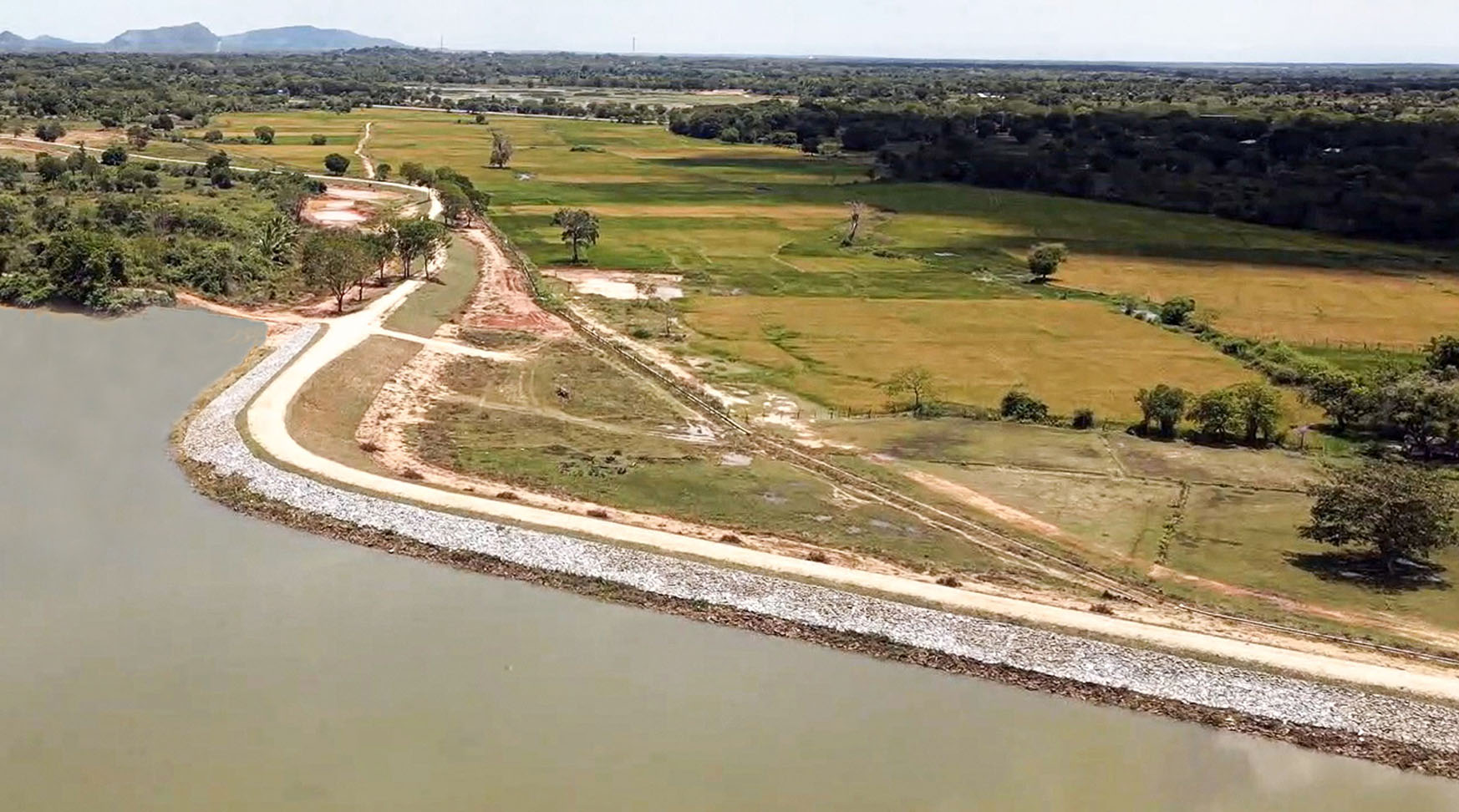
tools to enhance productivity, water-use efficiency, and resilience,
particularly in climate-vulnerable regions and village tank cascade systems.
Strengthening
Knowledge and Partnerships
As
a knowledge hub, the CSAC will consolidate research findings, best practices,
and field experiences from across the country. It will facilitate collaboration
among government agencies, research institutions, development partners, and the
private sector to scale up successful climate-smart solutions. Importantly, the
Centre will not directly implement all programmes. Instead, it will work in
partnership with relevant stakeholders to ensure that initiatives are
effectively planned, coordinated, and executed.
Strategic
Importance for the Future
The
establishment of the CSAC comes at a critical time, as Sri Lanka’s agricultural
sector faces increasing pressure from climate variability, extreme weather
events, and resource constraints. By providing a centralized institutional
mechanism, the Centre is expected to significantly enhance coordination and
long-term planning in the sector.
Among
the anticipated outcomes are improved policy coherence, increased adoption of
climate-smart technologies by farmers, strengthened institutional capacity, and
better access to climate information and innovation. Ultimately, the CSAC is
expected to play a pivotal role in ensuring national food security while
promoting environmentally sustainable farming systems that reduce greenhouse
gas emissions and improve natural resource management.
A
Step Toward Resilient Agriculture
In
summary, the launch of the CSAC represents a forward-looking initiative aimed
at transforming Sri Lanka’s agricultural landscape. By integrating policy
support, technology, training, and innovation, the Centre is poised to drive
the country toward a more resilient, productive, and sustainable future in
agriculture. The Centre will serve as a cornerstone institution in Sri Lanka’s
response to climate change, benefiting not only farmers but the entire nation. Ahead
of the official opening of the CSAC, a ceremonial event was held at the main
auditorium of the Ministry of Agriculture, Livestock, Land and Irrigation,
setting the tone for what officials described as a transformative initiative
for Sri Lanka’s agricultural future.
Pre-Inauguration
Event Marks Milestone for CSAC
The
pre-inauguration programme was conducted under the patronage of Deputy Minister
Namal Karunaratne, with the participation
of senior government officials, development partners, technical experts, and
stakeholders from across the agricultural sector. The event served both as a
formal welcome to distinguished guests and as a platform to highlight the strategic
importance of establishing a dedicated CSAC.
 |
| Mr. Karunaratne Dr. Senarathne Mr. Wickramasinghe Dr. Ratnayake Mr. Bandulasena |
Delivering
the welcome address, Dr. W. M. U. K. Ratnayake,
Additional Secretary of the Agri-Technology Division of the Ministry, outlined
the vision and core objectives of the newly established Centre. She emphasized
that the CSA Centre is not merely an institutional addition, but a critical
national response to the escalating challenges posed by climate change to Sri
Lanka’s agriculture sector. Dr.
Ratnayake elaborated that the Centre aims to serve as a national hub for
innovation, coordination, and knowledge-sharing, enabling the systematic
scaling up of climate-smart technologies and practices. She further highlighted
that strengthening resilience among farming communities, improving
productivity, and ensuring sustainable natural resource management remain at
the heart of the Centre’s mandate.
Secretary
to the Ministry, D. P. Wickramasinghe, also spoke at the event,
stressing the importance of institutional coordination and long-term planning.
He pointed out that the Centre would play a key role in aligning various
programmes implemented by different agencies, thereby enhancing efficiency and
ensuring better outcomes for farmers.
Adding
an international perspective, Dr. Athula Senaratne, Senior Agriculture
Specialist at the World Bank, highlighted the global
relevance of climate-smart agriculture and commended Sri Lanka for taking a
proactive step in establishing a dedicated institutional mechanism. He
reaffirmed the World Bank’s continued support for initiatives that promote
resilience, sustainability, and innovation in agriculture.
Mr.
Saman Bandulasena, Project Director of the Climate Smart Irrigated
Agriculture Project, shared insights into ongoing efforts to introduce
climate-resilient irrigation and farming practices. He explained that the CSAC would
further strengthen these initiatives by providing a centralized platform for
coordination, technical guidance, and knowledge dissemination.
The
event concluded with the vote of thanks delivered by Dr. B.M.V.S. Basnayake, Director of the Agri-Technology
Division. She expressed appreciation to all dignitaries, partners, and
stakeholders for their contributions and support in making the establishment of
the CSAC a reality.
The
auditorium event not only marked the ceremonial beginning of the Centre but
also reinforced the collective commitment of national and international
stakeholders toward building a climate-resilient agricultural sector in Sri
Lanka. It set the stage for the official opening that followed, symbolizing a
unified step forward in addressing the challenges of climate change through
innovation, collaboration, and strategic action.
Photographs by
Sineth
Dharmapala, Media Secretary of Deputy Minister of Agriculture and Livestock
Chathura Prabath Edirimanna Wijayathunge, Media Unit, Ministry of Agriculture,
Livestock, Land and Irrigation
Posted by CSIAP Sri LankaRead full articlePublished Date : 2026-04-27